Secretary RDD Reviews Saturation Status of Beneficiary-Oriented Schemes Across J&K
8.10 Lakh Households Mobilized Under UMEED; 444.39 Lakh Person-Days Generated Under MGNREGS
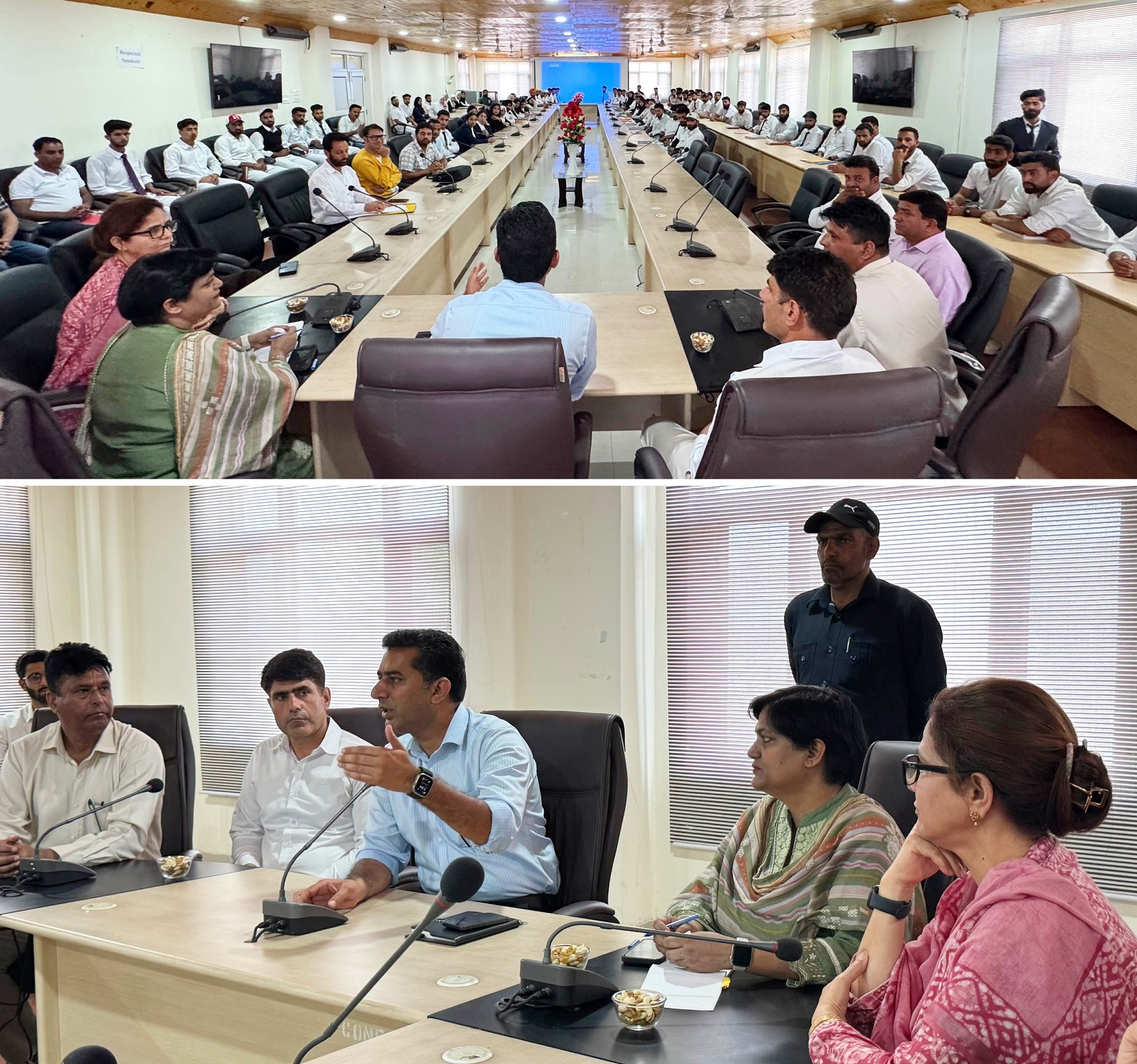
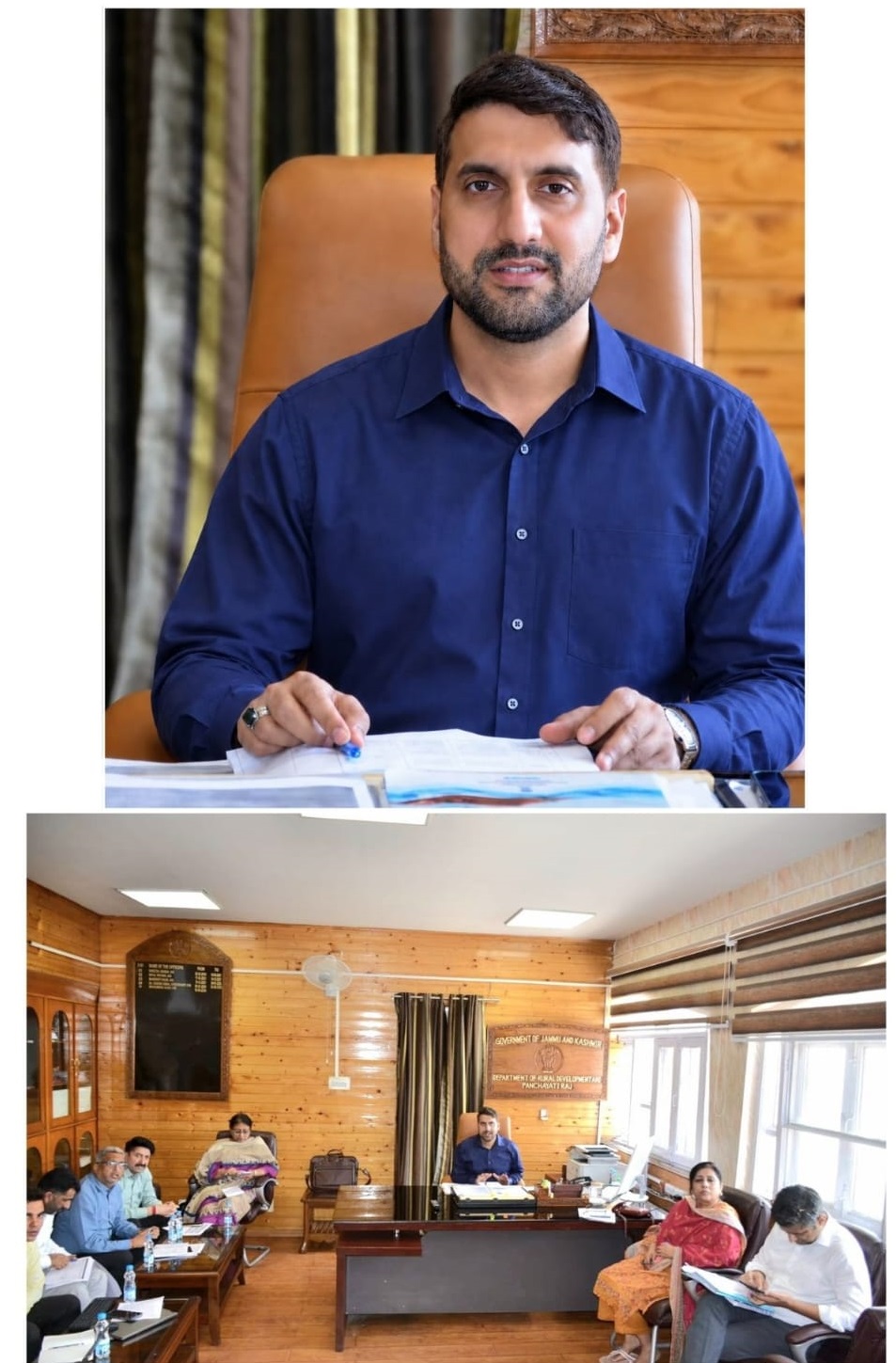
Srinagar, June 11 (PTK): Secretary, Rural Development Department (RDD) and Panchayati Raj, Mohammad Aijaz Asad, on Thursday chaired a review meeting to assess the saturation status of various Individual Beneficiary Schemes being implemented across Jammu and Kashmir.
The meeting reviewed the progress achieved under key flagship programmes, including UMEED, Mahila Kisan Sashaktikaran Pariyojana (MKSP), Mahatma Gandhi National Rural Employment Guarantee Scheme (MGNREGS), Pradhan Mantri Awaas Yojana-Gramin (PMAY-G), Swachh Bharat Mission-Gramin (SBM-G), Startup Village Entrepreneurship Programme (SVEP) and HIMAYAT.
The meeting was attended by Director General Rural Sanitation Anoo Malhotra, Mission Director JKRLM Dr. Shubhra Sharma, Chief Operating Officer HIMAYAT Rajneesh Gupta, Joint Director Planning Kamal Kumar Sharma and Additional Secretary (Member Secretary, MGNREGA) Waseem Raja, among other officials.
Emphasizing the importance of robust monitoring and evidence-based planning, the Secretary called for a comprehensive reporting framework reflecting the current status, achievements, targets, pipeline activities and future projections under each scheme.
He directed officers to undertake detailed situation analyses before finalizing future targets and stressed that planning must remain firmly rooted in field realities.
The Secretary further instructed departments to present scheme-wise and district-wise achievements separately, along with comparative progress achieved since April 2026. He also directed officials to revisit and update saturation targets wherever required to ensure that reports accurately reflect the latest achievements.
To provide a comprehensive picture of rural development interventions, he called for the inclusion of key indicators such as the Lakhpati Didi Initiative and other service delivery schemes in departmental reporting.
Reviewing progress under UMEED, the meeting was informed that the programme has surpassed its Self Help Group (SHG) formation targets, with 96,595 SHGs formed and more than 8.10 lakh rural households mobilized, significantly strengthening women-led economic empowerment across rural Jammu and Kashmir.
The Secretary directed officials to ensure that updated household coverage figures and community-level achievements are prominently reflected in all future reports and presentations.
Under MKSP, all 176 Detailed Project Reports (DPRs) for Integrated Farming Clusters have been completed, covering more than 51,000 SHG households. The Secretary sought detailed information regarding fund utilization, expected allocations and implementation timelines.
While reviewing HIMAYAT and other livelihood-generation programmes, the Secretary stressed the need for benchmarking current achievements against previous performance indicators.
The meeting was informed that under the DDU-GKY 1.0 phase, more than 35,700 youth have been trained, while under the newly launched DDU-GKY 2.0 phase (2025–28 Action Plan), around 1,700 candidates have already undergone training against a target of 32,000 youth.
Under MGNREGA, the department has nearly achieved its annual target by generating 444.39 lakh person-days, providing substantial employment opportunities and livelihood support to rural households across the Union Territory.
Significant progress was also reported in the housing and sanitation sectors. Under PMAY-G, more than 3.24 lakh rural houses have been completed against a target of 3.34 lakh houses, reflecting substantial progress towards housing saturation.
Similarly, Swachh Bharat Mission-Gramin (SBM-G) has achieved 100 percent saturation in ODF Plus Model Villages and Individual Household Latrines (IHHLs), marking a major milestone in rural sanitation and cleanliness.
The Startup Village Entrepreneurship Programme (SVEP) has also supported thousands of rural entrepreneurs by promoting sustainable self-employment opportunities and strengthening local rural economies.
The Secretary directed officers to include explanatory notes and analytical observations beneath all data tables to facilitate informed decision-making. He also instructed officials to strengthen field-level monitoring, conduct regular performance reviews and systematically incorporate feedback from districts and implementing agencies.
Reaffirming the department’s commitment to achieving saturation under all eligible beneficiary-oriented schemes, Mohammad Aijaz Asad emphasized that focused planning, accurate data management and continuous monitoring would remain central to achieving rural development goals across Jammu and Kashmir.(PTK)