Rising attacks on Muslims raise questions over India’s communal climate and political accountability
Shakir Nissar
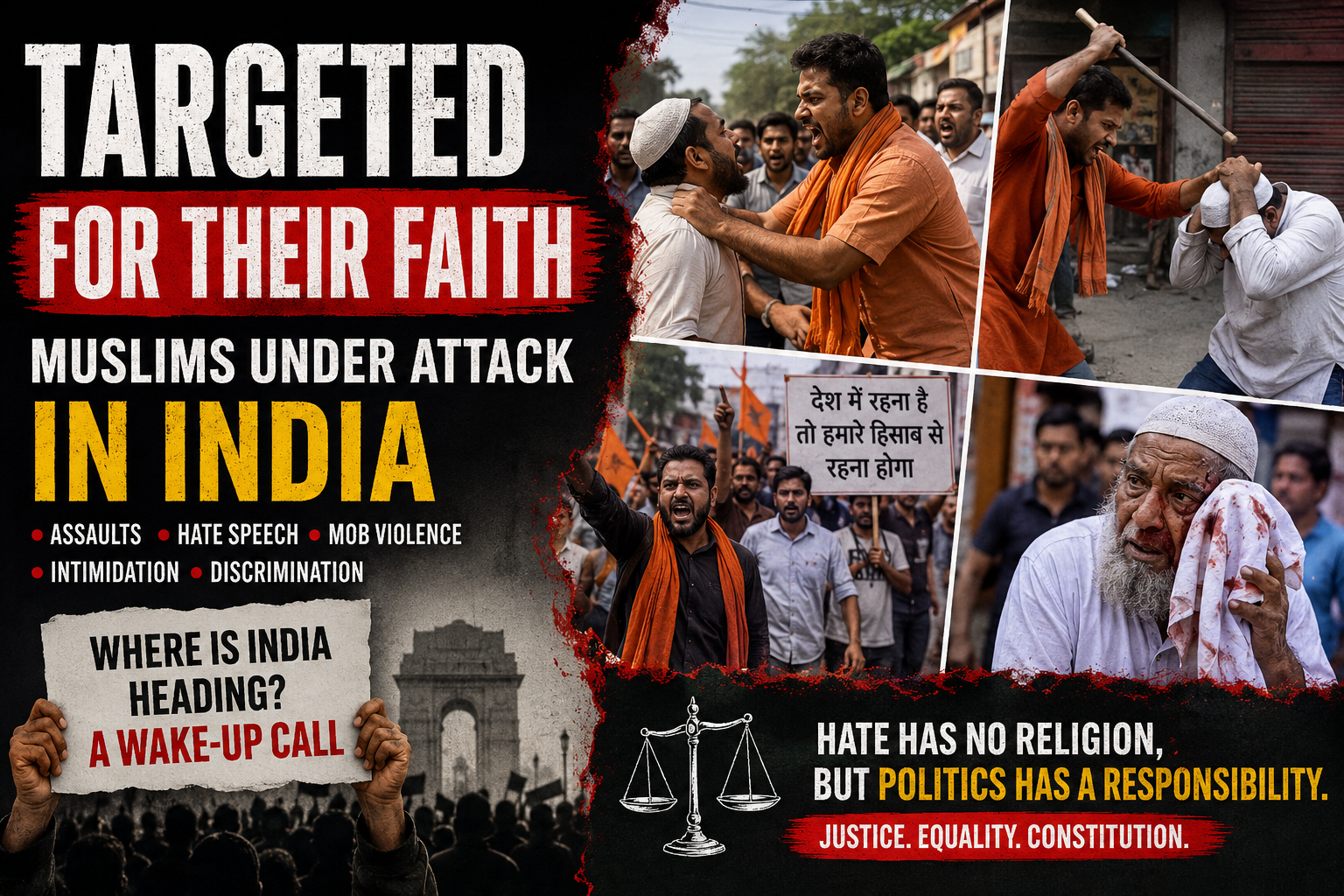
NEW DELHI, AUGUST 18 (PTK): A growing number of reported incidents involving assaults, intimidation, hate speech and attacks targeting Muslims have renewed concerns over the safety of religious minorities in India and raised difficult questions about the country’s communal environment.
Across social media, videos of Muslim men being beaten, harassed or publicly humiliated have repeatedly surfaced. However, individual videos must be independently verified before their location, date, context and identities of those involved can be established. What cannot be ignored, however, is the broader pattern documented by human-rights organisations and international observers.
Human Rights Watch, in its World Report 2026, reported increased hate speech and attacks against Muslims in India during 2025. It cited incidents in several states involving assaults on Muslim workers, vendors and others, while also raising concerns about unlawful demolitions of Muslim-owned properties and the failure of authorities to adequately protect minorities. (Human Rights Watch)
The report also noted that following the April 2025 Pahalgam attack, hate speech against Muslims increased sharply, with at least 64 incidents reported during the first 10 days, alongside attacks and intimidation against Muslims in different parts of the country. (Human Rights Watch)
These developments raise an important distinction: criticism should be directed at perpetrators, extremist groups and authorities accused of failing to prevent or punish violence not at Hindus as a religious community. Millions of Hindus reject communal violence, just as millions of Muslims do. India’s strength lies in the principle that a citizen’s safety and dignity should not depend on their religion.
At the same time, political accountability cannot be avoided. The BJP-led Union government has faced sustained criticism from rights organisations over policies and political rhetoric that they say have contributed to the marginalisation of Muslims and other minorities. Human Rights Watch has specifically accused authorities and BJP supporters of contributing to an environment in which minorities face discrimination, while the government has rejected many such characterisations. (Human Rights Watch)
The question, therefore, is not simply “Where is the BJP taking India?” The deeper question is whether India’s political leadership, state governments and law-enforcement agencies are doing enough to ensure that every citizen—Hindu, Muslim, Sikh, Christian or belonging to any other community—receives equal protection under the law.
A democracy cannot measure its strength only by economic growth, elections or infrastructure. It must also be judged by what happens when an ordinary citizen is attacked because of his identity. If a Muslim is assaulted by a mob, the first responsibility of the state should be to protect the victim, identify the perpetrators and ensure a fair investigation and prosecution.
There are also concerns about selective accountability. Human Rights Watch has previously reported allegations that authorities failed to adequately act against BJP supporters accused of attacks on minorities while victims themselves faced punitive action. (Human Rights Watch)
India’s Constitution promises equality before law and freedom of religion. Those promises cannot remain confined to constitutional text they must be visible on the streets, in police stations and inside courtrooms.
The growing circulation of disturbing assault videos should therefore become a reason for investigation, not communal retaliation; justice, not revenge; and accountability, not silence.
The responsibility ultimately rests with governments, police authorities, political leaders, civil society and citizens alike. No political party should be allowed to benefit from hatred, and no individual should be allowed to attack another citizen in the name of religion.
India does not need more Hindu-Muslim confrontation. It needs stronger rule of law, equal protection and political leadership willing to condemn violence regardless of the identity of the victim or perpetrator.(PTK)