


Rana calls for revival of willow cultivation to sustain Kashmir’s cricket bat industry
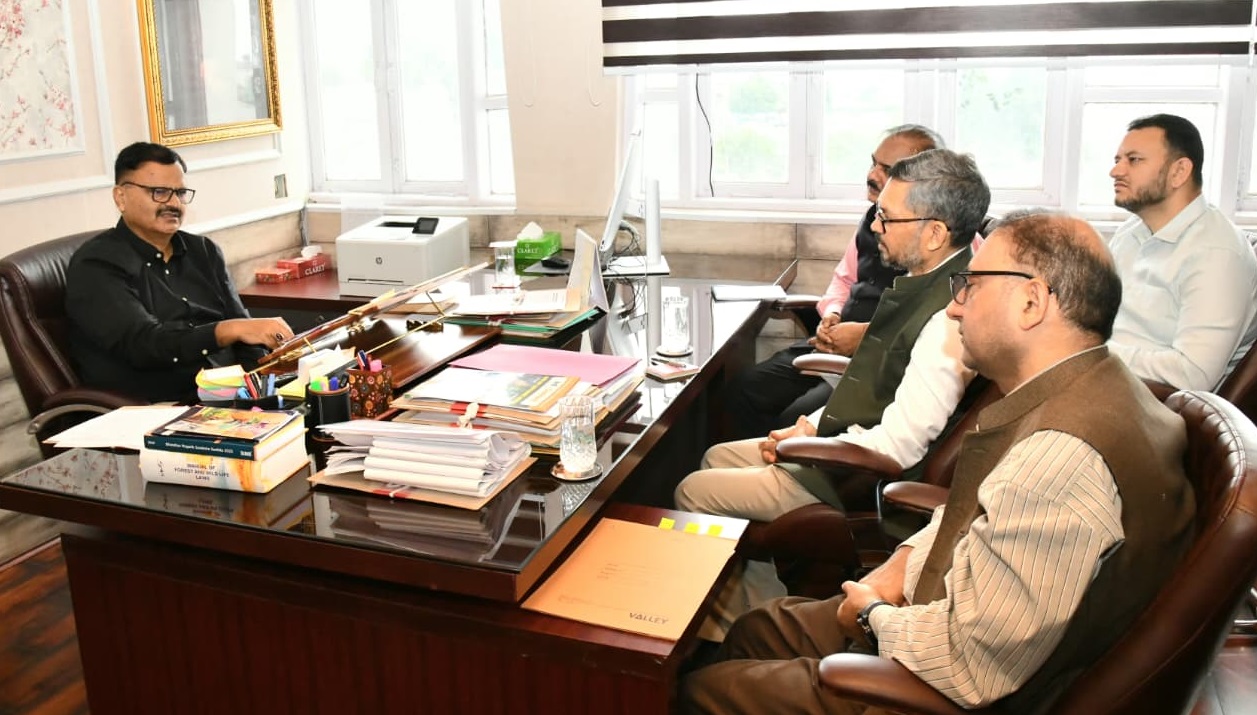
Directs coordinated drive to expand plantations, ensure sustainable supply of quality timber
SRINAGAR, JULY 31 (PTK): Minister for Jal Shakti, Forest, Ecology & Environment and Tribal Affairs, Javed Ahmed Rana, on Friday directed the concerned departments to launch a coordinated drive for the revival of willow cultivation across Kashmir and expand plantations to ensure a sustainable supply of quality timber for the cricket bat industry.
The directions were issued during a high-level review meeting convened to discuss the challenges confronting the willow sector and formulate a long-term roadmap for its revival and growth.
The meeting was attended by Principal Chief Conservator of Forests, J&K, Sarvesh Rai, Chief Conservator of Forests Kashmir, Irfan Rasool Wani, besides senior officers of the Forest Department and other concerned departments.
Addressing the meeting, the Minister observed that Kashmir is the country’s only source of specialised willow wood used for manufacturing cricket bats, making the region the national hub of the cricket bat industry.
He said hundreds of cricket bat manufacturing units, predominantly located in south Kashmir’s Anantnag district, provide direct and indirect employment to thousands of people engaged in willow cultivation, timber trade and bat manufacturing.
Rana expressed concern over the declining availability of quality willow timber, describing it as one of the biggest challenges facing the industry. He attributed the shortage to indiscriminate felling of mature willow trees without adequate replantation, resulting in uncertainty in raw material supply and rising production costs for local manufacturers.
“The declining availability of willow timber is a matter of serious concern. Expansion of plantations, introduction of improved willow clones and systematic replantation must become a priority so that the industry continues to flourish without facing shortages of raw material,” the Minister said.
He also noted that the area under willow plantations has steadily declined, particularly on private land, due to changing land-use patterns, and warned that failure to take timely corrective measures could adversely affect the long-term sustainability of the industry.
The Minister directed the Forest Department to identify suitable low-lying and marshy areas across the Valley for expanding willow plantations in coordination with Deputy Commissioners.
During the meeting, it was decided that the State Forest Research Institute (SFRI) will introduce improved willow species and clones and ensure the availability of quality planting material to enhance productivity and sustainability.
“Our objective is to build a self-sustaining willow cultivation ecosystem through scientific management, quality planting material, identification of new plantation areas and greater farmer participation. This will secure livelihoods while preserving Kashmir’s unique position as the country’s cricket bat manufacturing hub,” Rana said.
The Agriculture Department was directed to identify departmental farms and research blocks for raising quality willow planting material to support large-scale plantation drives.
The meeting also discussed scientific management and expansion of government willow plantations, timely disposal of mature and over-mature trees to augment raw material availability, streamlining the permission system for felling and transportation of willow timber, branding and Geographical Indication (GI) tagging for Kashmir willow bats.
Emphasis was also laid on strengthening coordination among the Forest, Agriculture, Industries & Commerce, MSME and allied departments to prepare a comprehensive long-term roadmap for the sector.
Rana directed the concerned departments to work in close coordination and submit a time-bound action plan for implementing the decisions taken during the meeting, stressing that the revival of willow resources is crucial not only for sustaining the cricket bat industry but also for safeguarding the livelihoods of thousands of families dependent on it.(PTK)
If you are looking for big wins and a fair game, this is the place to be. Give pk777xz a try!