Chief Secretary Finalizes Comprehensive Rehabilitation Framework for Drug Abuse Victims in J&K
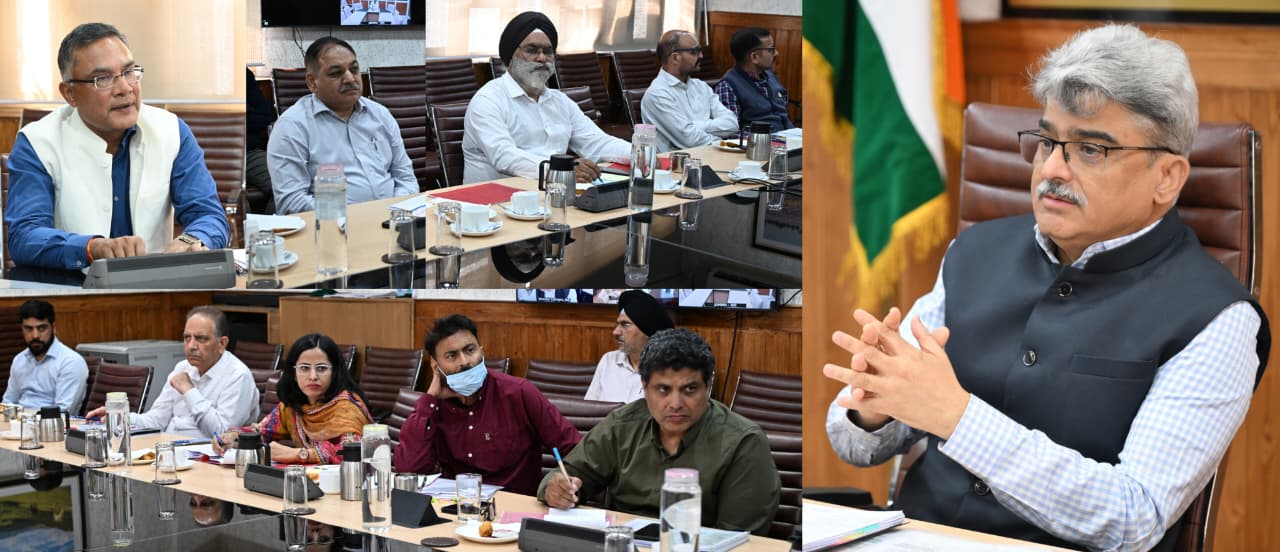
Srinagar, June 10 (PTK): In a major initiative aimed at strengthening the fight against substance abuse and ensuring long-term recovery of affected individuals, Chief Secretary Atal Dulloo on Tuesday finalized a comprehensive Rehabilitation and Socio-Economic Reintegration Framework for victims of drug abuse in Jammu and Kashmir.
The framework, discussed during a high-level meeting of senior officials, seeks to move beyond conventional de-addiction treatment by adopting a holistic approach that combines medical care, psychosocial support, education, skill development, employment opportunities and continuous monitoring to prevent relapse.
The meeting was attended by Additional Chief Secretary Finance, Principal Secretary Home, Commissioner Secretary Social Welfare Department, Commissioner Secretary School Education Department, Secretary Skill Development Department, Director Colleges, Head of IMHANS Srinagar, State Informatics Officer NIC and other senior officers.
Addressing the meeting, the Chief Secretary emphasized the need for a coordinated treatment-to-reintegration approach based on Individual Reintegration Plans (IRPs) tailored to the specific needs of each beneficiary.
He directed that the framework be implemented on a pilot basis through IMHANS Srinagar and one additional district to identify operational challenges and fine-tune the model before its expansion across the Union Territory.
Dulloo stated that each Addiction Treatment Facility (ATF) should function through a collaborative support mechanism involving psychiatrists, counsellors, ASHA workers and social workers. He highlighted the role of ASHA workers in ensuring adherence to treatment protocols and facilitating regular follow-up consultations and home visits.
The Chief Secretary said social workers would play a key role in connecting recovering individuals with rehabilitation opportunities, educational institutions, self-employment schemes and livelihood generation programmes to facilitate their successful return to mainstream society.
He also stressed the importance of community participation and advocated the creation of a wider support network comprising trained counsellors from Self Help Groups (SHGs), educational institutions and healthcare centres to strengthen outreach and follow-up mechanisms.
Additional Chief Secretary Finance Shailendra Kumar assured full support for the initiative and advised the Social Welfare Department to further refine the framework to make it more practical, outcome-oriented and beneficial for recovering individuals.
The framework is built around six major objectives, including institutionalising a structured rehabilitation cycle, ensuring smooth transition from treatment to socio-economic stability, reducing relapse rates through continuous support, mentor-led handholding, inter-departmental convergence and preventing premature exit from rehabilitation programmes.
Commissioner Secretary Social Welfare Department Sarmad Hafeez informed that the framework would be implemented through three distinct phases.
The first phase, Treatment and Stabilization, will focus on intake, assessment, detoxification, psychiatric evaluation and preparation of Individual Reintegration Plans.
The second phase, Reintegration and Livelihood Activation, will connect beneficiaries with education, skill development programmes, employment opportunities, apprenticeships and self-employment initiatives.
The third phase, Sustained Monitoring and Social Inclusion, will focus on long-term recovery, social acceptance, family support, mental well-being and continued economic stability.
A key feature of the framework is the assignment of a dedicated mentor to every beneficiary. The mentor will provide continuous guidance, coordinate with departments, monitor progress and facilitate access to various opportunities and support systems. Periodic physical, telephonic and digital follow-ups will also be conducted to ensure sustained recovery.
The framework also envisages strong inter-departmental coordination to ensure seamless delivery of services required for rehabilitation and reintegration.
During the meeting, Head IMHANS Srinagar, Prof. (Dr.) Arshid Hussain, presented the proposed model and highlighted evidence-based treatment protocols and best practices for ensuring successful rehabilitation. He also outlined the institution’s three-tier “Circle of Care” model and proposed a comprehensive capacity-building roadmap for personnel associated with the programme.
The Government believes that by integrating treatment, education, livelihood generation, social inclusion and continuous monitoring under a single structured framework, the initiative will significantly reduce relapse rates and empower recovering individuals to lead productive, dignified and self-reliant lives.
(PTK)