All You need to know about Ramadan
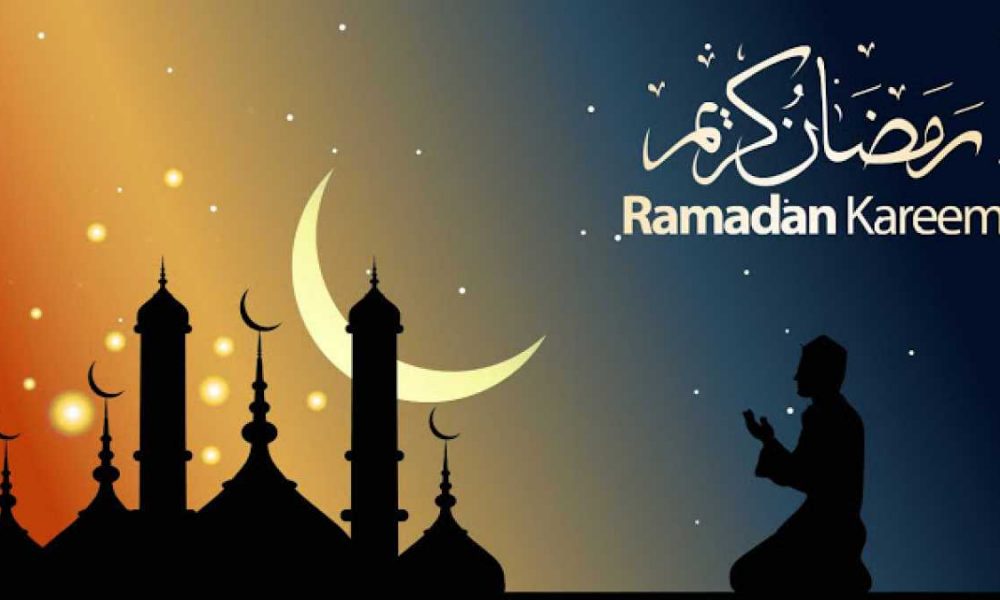
The month of Ramadan is that in which was revealed the Quran; a guidance for mankind, and clear proofs of the guidance, and the criterion (of right and wrong). And whosoever of you is present, let him fast the month, and whosoever of you is sick or on a journey, a number of other days. Allah desires for you ease; He desires not hardship for you; and that you should complete the period, and that you should magnify Allah for having guided you, and that perhaps you may be thankful.
It is believed that the Quran was first revealed to Muhammad during the month of Ramadan which has been referred to as the “best of times”. The first revelation was sent down on Laylat al-Qadr (The night of Power) which is one of the five odd nights of the last ten days of Ramadan. According to hadith, all holy scriptures were sent down during Ramadan. It is further believed that the tablets of Ibrahim, the Torah, the Psalms, the Gospel and the Quran were sent down on 1st, 6th, 12th, 13th and 24th Ramadan, respectively.
According to the Quran, fasting was also obligatory for prior nations, and is a way to attain fear of God. God proclaimed to Muhammad that fasting for His sake was not a new innovation in monotheism, but rather an obligation practiced by those truly devoted to the oneness of God. The pagans of Mecca also fasted, but only on tenth day of Muharramto expiate sins and avoid droughts.
The ruling to observe fasting during Ramadan was sent down 18 months after Hijra, during the month of Sha’ban in the second year of Hijra in 624 CE.
Abu Zanad, an Arabic writer from Iraq who lived after the founding of Islam, in around 747 CE, wrote that at least one Mandaean community located in al-Jazira (modern northern Iraq) observed Ramadan before converting to Islam.
According to historian Philip Jenkins, Ramadan comes “from the strict Lenten discipline of the Syrian Churches”, a postulation corroborated by other scholars, such as the theologian Paul-Gordon Chandler. This suggestion is based on the idea that the Quran itself has Syriac Christian origins, a claim to which some Muslim academics such as M. Al-Azami, object. With professional athletes sharing their experiences of fasting during this religious period, Ramadan is more in the public eye than ever before – and while tradition, culture and religion remain at the forefront, more and more Muslims are finding ways to fit their lifestyle around their faith.