J&K Biodiversity Council Celebrates International Day for Biological Diversity at Dachigam
Srinagar, May 22 (PTK): Jammu and Kashmir Biodiversity Council on Thursday celebrated the International Day for Biological Diversity at Dachigam National Park, highlighting the Union Territory’s rich ecological heritage and reinforcing the global message of “Act Locally, Impact Globally.”
The event was attended by Sheetal Nanda as Chief Guest, along with Sarvesh Rai, Chaturbhuj Bahera, Irfan Rasool Wani, Professor Anzar Khuroo, senior forest officers and members of Biodiversity Management Committees from across Jammu and Kashmir.
Addressing the gathering, Sheetal Nanda said the International Day for Biological Diversity serves as a reminder of humanity’s deep dependence on nature and stressed the need for conservation of biodiversity for human survival.
She emphasized the importance of balancing infrastructure development with environmental preservation and directed the Council to prepare a comprehensive catalogue of flora, fauna and bird species found in the region. She also advocated creation of ex-situ conservation areas for protection of vulnerable species.
Speaking on the occasion, Sarvesh Rai highlighted that nearly 48 percent of Jammu and Kashmir’s geographical area is under forest cover, with 25 percent of that falling under Wildlife Protected Areas.
He said forests provide crucial ecosystem services including water purification and pollination and noted the economic importance of Non-Timber Forest Products (NTFPs). He informed that local Biodiversity Management Committees have generated nearly ₹25 crore over the last three years.
Rai also shared encouraging conservation updates, stating that populations of species including Hangul, Brown Bear, Black Bear and Tiger are witnessing steady recovery in the region.
Earlier, Chaturbhuj Bahera stressed that biodiversity extends beyond forests and includes agricultural and cultural diversity essential for future food security. He highlighted the role of 2,490 active Biodiversity Management Committees in documenting local biological resources.
Providing a scientific perspective, Professor Anzar Khuroo said India is among the world’s 20 megadiverse countries and hosts four of the planet’s 36 biodiversity hotspots. He noted that the Himalayan ecosystem alone supports nearly 12,000 flowering plant species, including around 5,000 species found in Kashmir.
He stressed the need for sustainable development practices and called for “course correction” in development planning to protect fragile ecosystems.
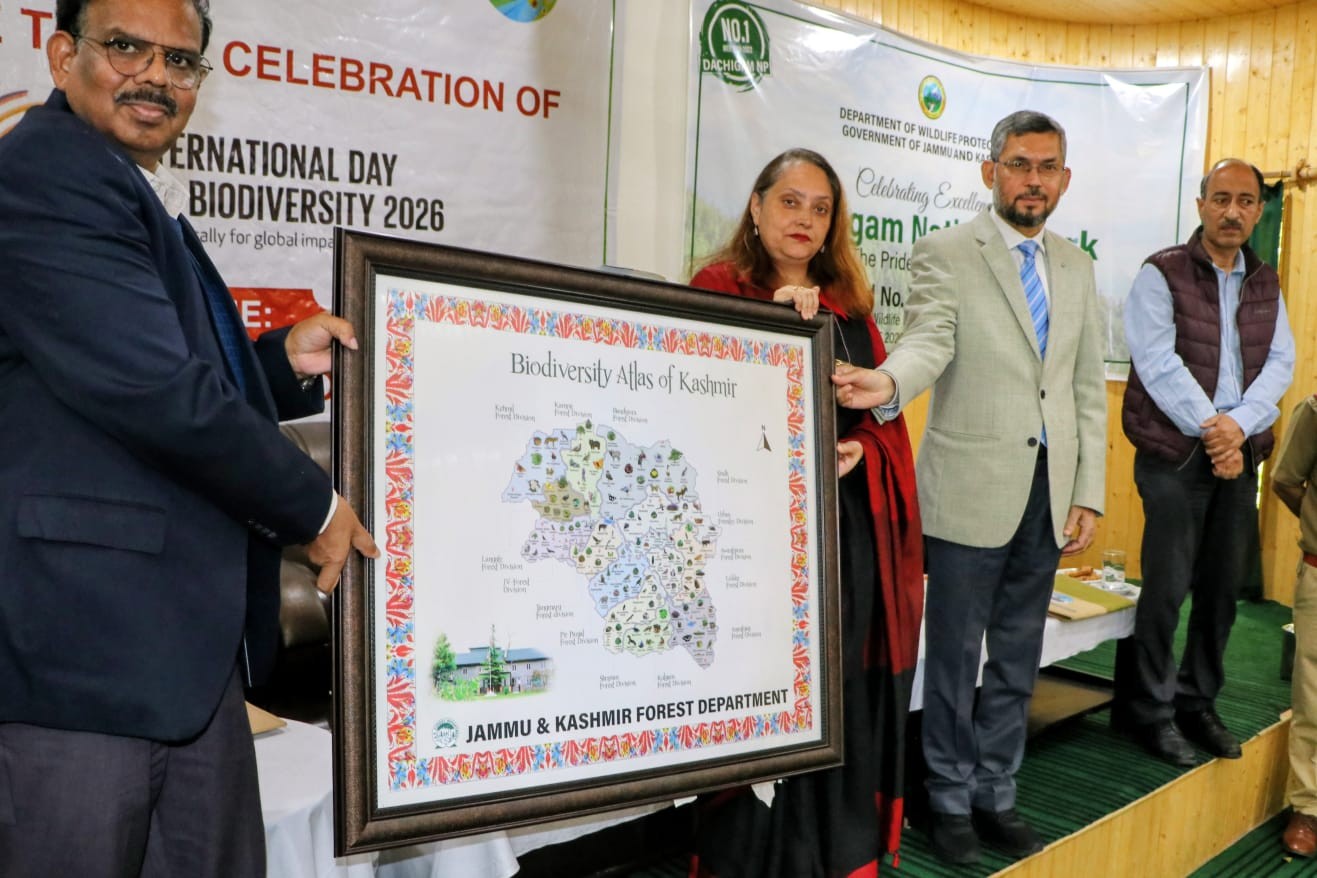
The programme concluded with a collective pledge for biodiversity conservation led by environmentalist Nazir Benazir. A Biodiversity Atlas of Kashmir was also unveiled on the occasion.(PTK)