

Billions Dead: That’s what could happen if India and Pakistan wage nuclear war
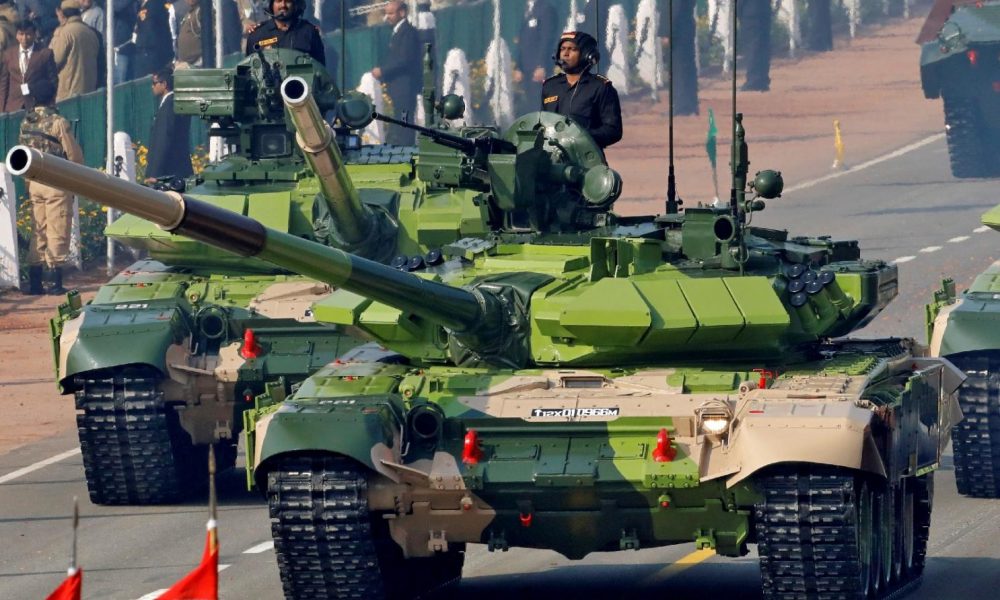
SRINAGAR:  For its part, the Indian army plans to immediately take the offensive under a doctrine called “ Cold Start .” Cold Start envisions rapid mobilization followed by a major offensive into Pakistan before the country can respond with tactical nuclear weapons. Such an offensive—and Pakistan’s likely conventional defeat—could make the use of tactical nuclear weapons all the more likely .

With the world’s attention firmly fixated on North Korea, the greatest possibility of nuclear war is in fact on the other side of Asia nationalinterest.org reported.

That place is what could be called the nuclear triangle of Pakistan, India and China. Although Chinese and Indian forces are currently engaged in a standoff, traditionally the most dangerous flashpoint along the triangle has been the Indo-Pakistani border. The two countries fought three major wars before acquiring nuclear weapons, and one minor one afterwards. And this doesn’t even include the countless other armed skirmishes and other incidents that are a regular occurrence.

At the heart of this conflict, of course, is the territorial dispute over the northern Indian state of Jammu and Kashmir, the latter part of which Pakistan lays claim to. Also key to the nuclear dimension of the conflict is the fact that India’s conventional capabilities are vastly superior to Pakistan’s. Consequently, Islamabad has adopted a nuclear doctrine of using tactical nuclear weapons against Indian forces to offset the latter’s conventional superiority.
The reason why India didn’t respond to force, according to Narang, is that—despite its alleged Cold Start doctrine—Indian leaders were unsure exactly where Pakistan’s nuclear threshold stood. That is, even if Indian leaders believed they were launching a limited attack, they couldn’t be sure that Pakistani leaders wouldn’t view it as expansive enough to justify using nuclear weapons. This is no accident: as Khan said, Pakistani leaders intentionally leave their nuclear threshold ambiguous. Nonetheless, there is no guarantee that India’s restraint will continue in the future. Indeed, as Michael Krepon quipped, “Miscalculation is South Asia’s middle name.”

Much of the panel’s discussion was focused on technological changes that might exacerbate this already-combustible situation. Narang took the lead in describing how India was acquiring the capabilities to pursue counterforce strikes (i.e., take out Pakistan’s nuclear arsenal in a preventive or more likely preemptive strike). These included advances in information, surveillance and reconnaissance capabilities to be able to track and target Islamabad’s strategic forces, as well as a missile-defense system that could take care of any missiles the first strike didn’t destroy. He also noted that India is pursuing a number of missile capabilities highly suited for counterforce missions, such as Multiple Independently Targetable Reentry Vehicles (MIRVs), Maneuverable Reentry Vehicles (MARVs) and the highly accurate BrahMos missiles that Dehli developed jointly with Russia. “BrahMos is one hell of a counterforce weapon,” even without nuclear warheads, Narang contended.

With nuclear weapons introduced, Delhi’s no-first-use doctrine no longer applies. Indian leaders, knowing they’d face incredible domestic pressure to respond, would also have no guarantee that Pakistani leaders didn’t intend to follow the tactical use of nuclear weapons with strategic strikes against Indian cities.

Armed with what they believe is reasonable intelligence about the locations of Pakistan’s strategic forces, highly accurate missiles and MIRVs to target them, and a missile defense that has a shot at cleaning up any Pakistani missiles that survived the first strike, Indian leaders might be tempted to launch a counterforce first strike.

As former Indian National Security Advisor Shivshankar Menon wrote in his memoirs (which Narang first drew people’s attention to at the Carnegie Nuclear Policy Conference in March): “India would hardly risk giving Pakistan the chance to carry out a massive nuclear strike after the Indian response to Pakistan using tactical nuclear weapons. In other words, Pakistani tactical nuclear weapon use would effectively free India to undertake a comprehensive first strike against Pakistan.”